
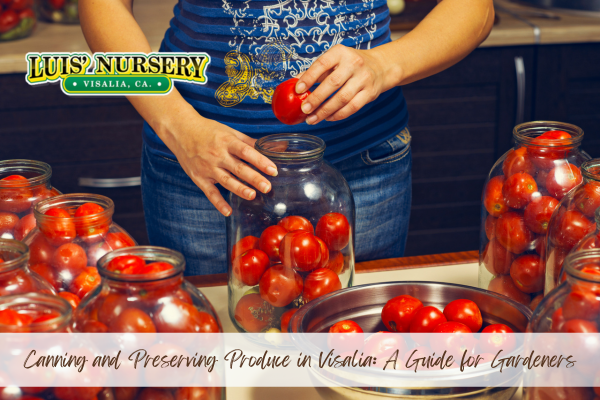
As our vibrant San Joaquin and Central Valley summer days give way to the bountiful harvest of fall, many of us are eager to preserve the fruits (and vegetables) of our labor. Canning and preserving are excellent ways to enjoy your homegrown produce long after the season has ended. If you’re new to canning or just looking to refine your skills, this friendly guide will help you get started.
**Best Time to Start Canning**
In Visalia, the prime canning season typically runs from late summer to early fall. This is when your garden will be overflowing with ripe tomatoes, cucumbers, peppers, and a variety of fruits. Keep an eye on local harvest calendars to determine the best times for different produce. Generally, the peak months for canning in our area are July through September, when you’ll find the freshest, most flavorful ingredients ready for preservation.
**Choosing What to Can**
When it comes to deciding what to can, focus on produce that is in abundance and complements your cooking style.
Here are some popular choices that do exceptionally well in jars:
- Tomatoes:
Perfect for making sauces, salsas, or simply canning whole tomatoes for use in soups and stews. - Cucumbers:
Great for pickling! Try dill pickles, sweet pickles, or even pickled relish. - Peppers:
Canning peppers can add a zesty kick to your meals. Consider making pepper jelly or canning them in oil. - Fruits:
Apricots, peaches, and pears are fantastic for making jams and preserves. You can also can fruit in syrup for a sweet treat later on.
**Essential Canning Supplies**
Before you dive into canning, make sure you have the right supplies.
Here’s a basic list to get you started:
- Canning Jars:
Choose glass jars specifically designed for canning, available in various sizes. - Lids and Bands:
New lids are crucial for a proper seal, while bands can be reused if they’re in good condition. - Water Bath Canner or Pressure Canner:
A water bath is suitable for high-acid foods like fruits and tomatoes, while a pressure canner is necessary for low-acid foods, such as vegetables. - Canning Tools:
Invest in a jar lifter, funnel, and bubble remover to make the process smoother.
**Canning Process Basics**
While there are many canning recipes out there, here’s a simplified overview of the canning process:
- Prepare Your Produce:
Wash and chop your fruits or vegetables as needed. - Sterilize Your Jars:
Boil your jars in water for at least 10 minutes to ensure they’re clean and sterilized. - Cook Your Produce:
Follow your recipe for cooking the produce, whether it’s making a jam, sauce, or pickles. - Fill the Jars:
Use a funnel to fill your jars, leaving the appropriate headspace as indicated in your recipe. - Seal and Process:
Wipe the rims of the jars, place on the lids, and process in your canner according to your recipe’s instructions.
At Luis Nursery, we’re not just about plants—we’re also passionate about helping you with all of your gardening and preserving needs. Our knowledgeable staff can help you find the right supplies and answer any questions you may have. Canning and preserving your garden produce is a rewarding way to enjoy the flavors of Visalia all year round. With a little planning and the right techniques, you can create delicious homemade preserves that your family and friends will love. So gather your supplies, embrace the bounty of your garden, and let the canning adventures begin! Happy preserving from all of us at Luis Nursery!